By Havin Guneser
James Ussher was an Anglican bishop and the Archbishop of Armagh in the seventeenth century. Ussher is famous for calculating the creation of the world based on genealogies in scripture and historical events. He published his findings in a work titled Annales Veteris Testamenti, a prima mundi origine deducti (Annals of the Old Testament, From the Beginning of the World), in which he dated the creation of the world to 4004 BCE. His efforts to create a timeline for the world’s creation based on sacred texts led him to the Sumerians. In Sumer, we witness the very first emergence of a state-like structure, or the womb of the state. Thus, it seems that the womb of the state aligns closely with the time when God created the world.
Many years later, Abdullah Öcalan also journeyed to Sumer. The well known slogan Jin-Jîyan-Azadî traces the origins of the freedom struggle back to the Sumerians. In his quest to define what Truth is, Öcalan finds himself in Sumer, interpreting the mighty struggles depicted in Sumerian mythology. There he encounters the Sumerian word Amargi, which signifies a return to the mother.
This return to the mother is both physical, as liberated formerly enslaved people return to the hearth, and it reflects a deep yearning to return to the natural society, where the mother-woman, or mother-goddess, is central. She embodies communal, care-based social values and morals, as well as innovations of the era, the generator of life and abundance of food, in stark contrast to slavery and exploitation. It is these attributes — rather than biological characteristics — that make her the mother goddess a powerful symbol, and the mother-woman a leader in society. This is the life that is yearned to be returned to.
In Kurdish, one of the oldest languages still spoken today with roots in Mesopotamia, the words jin (woman) and jîyan, (life) share the same root, highlighting the centrality of woman in and for life. If being detached from this and the yearning to return to it defines Amargi (freedom), it becomes clear why Jin, Jîyan, and Azadî (or Amargi) are woven together to form the foundation of the struggle for freedom and free-life particularly for the Kurdish women’s movement, and more broadly for the Kurdish freedom movement as a whole.
It is interesting to note that both the creation of the world and the loss of freedom should lead us back to the Sumer. According to many scholars, the roots of colonialism and capitalism can also be traced back to this ancient civilization. Not only were women the last colony (Maria Mies 1988) but they were also the first (Öcalan 2020). The Sumerians frequently conducted military campaigns to the north in search of timber, hewn stone, and metals. This connection provides the basis for interpreting the story of Gilgamesh and Enkidu, setting the stage for the institutionalization of patriarchy. Consequently, the colonization of women is realized through the intertwined use of the below three methods:
• Monopoly over ideological constructions and their tools;
• Monopoly over use of violence;
• Seizure of and monopoly over the economy.
To seize surplus product and values, the foundations of society had to be undermined by capital and power monopolies. Key to this process was the discrediting of the central figures in matriarchal societies — women.
We can observe that all subsequent forms of colonization and enslavement are carried out using similar methods by the patriarchy. The mindset or the mentality required to make appropriation of surplus product and surplus value easier and more widespread has been developed through the intertwined use of these three methods, imitating female slavery, as seen in various examples (Öcalan 2017).
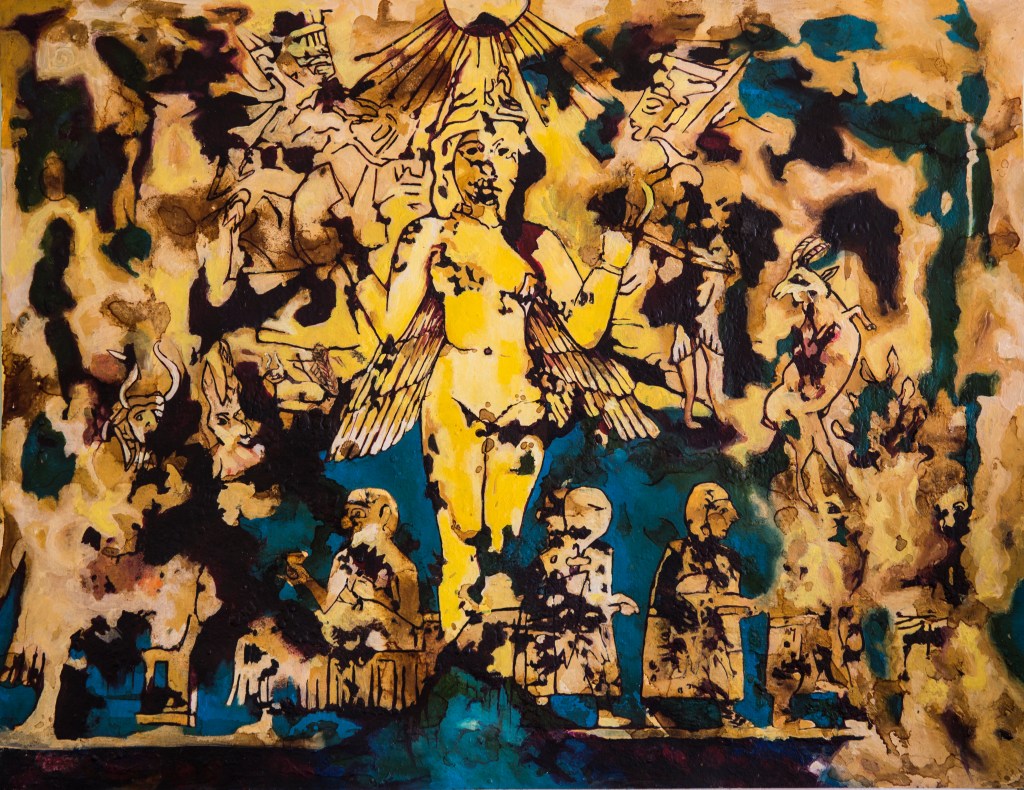
We hear the voices of female figures, such as the ancient Mesopotamian goddess of war, love, and fertility, Inanna, in mythologies, calling for the recovery of what has been lost — her mes, which are her inventions. In fact, together with these, what has been lost is free life itself. While many struggles have revealed what freedom is not, the quest to clarify what it truly is still requires effective methods of struggle.
This is because understanding the nature of Truth — what it is and how it has been obscured and lost — has been a struggle for at least five thousand years. Öcalan argues that history is not shaped solely by class struggles, but primarily by the contradiction between the state and the commune. The commune predates the emergence of classes and frames their emergence. For this reason, there is a significant effort by Öcalan and the Kurdish Freedom Movement to decipher the ideological structures that have formed over five thousand years, with recent archaeological findings tracing them back even twelve thousand years.
I cannot, nor is it possible, to provide a full analysis of all Western thinkers and intellectuals here, as there are those who have done this more thoroughly. However, I can try to illustrate the need to contextualize, both historically and in the present, the damage that power structures, capitalism and nation-states together with religionism have inflicted on our mentality.
The Destruction of Life and Construction of a Modern Western Mentality
In The Dialectic of Enlightenment Max Horkheimer and Theodor Adorno argued “Animism endowed things with spirits; industrialism transforms spirits into objects.” During the period of a revival of animism in Europe in the 1500s, Bacon and Descartes fully served the early capitalists to achieve this objectification. It would be misleading to think that Bacon and Descartes acted alone; those in power always support views that benefit them. Accordingly, kings, aristocrats, and the church on the one hand, and capitalists on the other formed an alliance, despite their conflicting interests, to suppress seeing all things as alive and not as objects. The church and aristocrats believed that the idea of life being everywhere threatened their existence and legitimacy. Peasant uprisings were denounced as heretical, while witch hunts in England, Germany, Italy, Switzerland, and France sought to induce change through the massacre of women and the condemnation of the knowledge held by women healers. The horrific violence that occurred could only be legitimized and justified in relation to capitalist modernity and the emergence of its science.
It makes sense, of course. If everything is alive and has a soul, and if the subject-object distinction had not developed, then capitalist exploitation would be morally impossible. Immanuel Kant, one of the most celebrated ethicists in Western philosophy, echoes this sentiment when he states, “We have no direct duty to non-humans. They are merely tools for the ultimate goal, which is humanity.”
During this period, the capitalists emerging as a new institutional power on the European stage needed a new relationship with the land, including its minerals and metals. The concepts of property, ownership, and exploitation necessitate the objectification of the land, which in turn requires a shift in mentality — specifically, the belief that they are not alive.
Despite their contradictions, the old and new powers paved the way for the unlimited plundering of the world through different exploitative approaches, unrestricted by any moral or ethical framework. As the concept of production and consumption developed in pursuit of maximum profit and gain, efforts to condition society to accept this mentality intensified. People were not only torn from the land, the land was also rendered lifeless, without a spirit or a soul.
And increasingly, among other things, soil was encouraged to be seen for the use of humans. Limitless exploitation of both the land and the humanity followed as this mentality took root.
Francis Bacon sought to demonstrate that nature is not a living being but rather an object governed by a mechanical system. This approach involved perceiving nature as a kind of machine and using experimental methods to grasp its functioning. He put significant effort into this endeavor, aiming not only to reveal a perspective that allows for exploitation but also to uncover a morality that sanctifies it. In his work The Great Renewal, Bacon states, “My only earthly wish is to extend the miserable narrow limits of man’s dominion over the universe to the promised boundaries.” In his writings the mindset of dominance is everywhere “..[nature will be] bound into service, hounded in her wanderings and put on the rack and tortured for her secrets.” He never masks his agenda, which is crystal clear in statements such as “I am come in very truth leading you to Nature with all her children to bind her to your service and make her your slave… the mechanical inventions of recent years do not merely exert a gentle guidance over Nature’s courses, they have the power to conquer and subdue her, to shake her to her foundations.”
Such perspectives did not begin with Descartes or Francis Bacon; they are already evident in the philosophy of Aristotle, and appear vividly in the Bible, Koran and Torah. They go as far back as the epic Gilgamesh and the story of Inanna as well as other creation mythologies. A contemporary expression of such perspective can be found in the work of theoretical quantum physicist Gerard J. Milburn, who states, “The aim of modern science is to reach an understanding of the world, not merely for purely aesthetic reasons, but so that it may be ordered to our purpose.”
The early seventeenth century witnessed significant social unrest due to issues like seizure of common lands and economic hardship among the peasantry. Bacon considered this unrest as a threat to the stability of the state. He also perceived the religious tensions and the heretical movements at the time as challenges to societal order. Bacon’s emphasis on empirical methods and the pursuit of knowledge allowed him to frame torture as a tool for extracting truth. By comparing inquiry into nature with the interrogation of individuals, he suggested that a thorough examination, including the possibility of torture, was justified in the pursuit of social harmony. He posited that maintaining societal order could supersede individual rights where the greater good was at stake. These views might not have made much of a difference had they been mere individual perversions; however, Francis Bacon served as Attorney General and later as Lord Chancellor of England during the reign of King James I. He was appointed to these high-ranking positions due to his legal expertise and close relationship with the king. So, just as described above, he deployed science and technology directly at the service of domination, in this case legitimizing torture to protect state authority. Francis Bacon viewed torture as a weapon against peasant uprisings, just as he regarded science as a weapon against nature. Like the peasants, nature had long resisted domination, and science must ultimately break that resistance. (Hickel 2021)
French philosopher René Descartes, despite moving frequently in Europe, wrote all of his major work during his more than twenty years in the Netherlands. He extended Bacon’s mindset by asserting that plants and animals do not possess souls and act solely based on mechanical laws. To support his claim, he conducted extreme and brutal experiments, seeking to demonstrate that animals, despite appearing alive, were merely lifeless objects. In the 1600s, these concepts represented a direct assault on the foundational principles of mother-woman based societies, driven by a collaborative effort among capitalists, the church, and the aristocracy to assert control over the realm of science. This view claimed that only humans were truly alive, contributing to similar divisions among people and promoting sexism, nationalism, religious intolerance, and racism. Although these ideas have been challenged over time, the resulting shift in mindset had already occurred, enabling capitalism to progress unimpeded.
The newly developing monopolies in Amsterdam and London faced threats from the established monopolies that held hegemony over Europe. They required intellectual support to create space for their own emerging monopolies. In this context, Amsterdam and London became sanctuaries for those opposing French and Spanish rule, where they actively promoted this as a strategy to undermine their rival forces. The monopolies in Spain and France were deeply intertwined with religious and royal authority, making them superior and more powerful in every respect. Had the growing monopolies in Amsterdam and London adopted similar structures, they likely would not have survived. The only viable path forward was to create a new type of monopoly. This new construct, English capitalism, has evolved since the sixteenth century. From ideology to manufacturing, and from politics to militarism a new monopoly has been built, with some of the previously mentioned figures playing pivotal roles in this transformation. Here we do not observe the development of a new society but rather the formation of a different monopoly. Until the 1780s, the hegemonic wars among these monopolies continued, marked by a strategic alliance between Amsterdam and London. Following the French Revolution and the Napoleonic Wars, this alliance succeeded in establishing itself as the sole hegemony.
The Rise of Capitalism and Nation-State
Capitalist modernity rests on three pillars: capitalism, the nation-state, and industrialism. As capitalism seized the opportunity to establish itself as a system, it began by dismantling the primary social structures of pre- and post-history. First, under the banner of the “witch hunt,” it reduced the struggling power of women’s social structure to ashes. The witch hunt targeting women cannot be understood independently of capital (Federici 2004). This savagery of burning effectively served to establish capitalism’s hegemony over women, representing the deepest form of slavery. Today, women’s subservience to the system is closely linked to these burnings carried out during the rise of capitalist hegemony (Öcalan 2025). Thus capitalism is not merely an economic system; it is fundamentally a mindset — a mentality, grounded in profit: every human activity must be driven by the logic of profit.
Abdullah Öcalan in his magnum opus Sociology of Freedom says, “The ethical analyses of philosophers such as Plato, Aristotle, Kant, and others have significantly contributed to state theory.” The work of these thinkers also indicates a preparation for the individual’s transition from society to the state, emphasizing the fundamental function of ethics: how to make the individual beneficial to the state.
He also demonstrates the consequences of the distinction between subject and object, highlighting whom it serves and how exploitation occurs on a broader scale. Rather than focusing on a mindset of domination, Öcalan shows how we can transcend both dogmatism and oppression, recognizing that life is filled with countless possibilities, provided we have the ability to make free choices.
This is why the democratic tradition represented by Abdullah Öcalan and the Kurdish freedom movement focuses on the roots of the question of freedom, across all disciplines and spheres of thought engaging with discussions on subatomic particles, quantum concepts, and intuitions, while also interpreting both written and oral histories, mythologies, and archaeological findings. This approach reiterates that everything has a spirit and is alive when we start from the principles of life and freedom.
The second significant aspect of institutionalization that emerged alongside the capitalist monopoly during Britain’s ascent to hegemony in London was the re-organization of social hierarchy and the traditional state structure into a nation-state. This formation of the nation-state occurred concurrently with the solidification of capitalist monopoly over the economy, revealing a deep interconnection between the two. A monopoly over the economy cannot exist without a corresponding monopoly on power. Economic monopolies are inherently intertwined with monopolies over ideology and power. In fact, the state’s monopoly on power represents a concentrated and institutionalized form of economic monopoly. The previous state model was structured as an entity positioned above society, carefully delineating boundaries between itself and society, which at times limited its power.
In the nation-state model the concept of the nation encompasses all of society, enabling the state to legitimize its existence through its ideological and economic dominance. This framework facilitates the extensive consolidation of power, representing the maximum monopolization of power in the era of capitalist monopoly. It functions as the “monopoly of monopolies” (Öcalan 2013) and ultimately fosters nationalism as its guiding faith.
The nation-state has greatly benefited from the nationalization of traditional state structures and religions. Conversely, the nationalization of traditional culture, particularly religion, has played a crucial role in shaping the ideology of the nation-state. Thus, the combination of capitalism, nation, state, and nationalism is central to this new development toward fascism.
The British nation-state emerged as capitalism’s most effective weapon. Internally, the state apparatus generates uniform individuals by working to “homogenize” all social structures under the guise of “citizenship.” This process transforms the proletariat into wage slaves, while the owners and rentiers are restructured into a new hierarchical entity known as the bourgeoisie.
To better understand how the nation-state creates a homogeneous society, we must analyze what the bourgeoisie targets through its concepts of the individual and the citizen. The concepts of the individual, individualism, individual rights and freedoms serve to mask and legitimize divisions. In response, identity struggles emerged among communities of workers, artisans, peasants, intellectuals, religious communities, women, and ethnic groups.
The tendency toward homogenization in the form of social engineering, inherent in the nation-state — if not constrained by democracy and the rule of law — became crystal clear in the fascist state model. Mussolini and Hitler promoted the mentality of one people, one empire, one leader, one language, one homeland, one nation, one culture — all under an all-controlling state. Reducing the complexity of society, and erasing differences is the core logic of the fascist state, which inevitably leads to genocide, as homogeneity is fundamental to its functioning.
Thus, just as bourgeois political economy legitimized capitalism, philosophies of the state and the Law established the foundation for the modern nation-state and its nationalism.
On the other hand, capitalist modernity’s industrial monopoly significantly impacts monopolies over ideology and power. Thus, limiting the analysis of industrial monopoly to a narrow technological logic leads to fundamental errors just like the reduction of capitalism to the economy. The function that capitalism assigns to industrialism is generally to destroy the economy of society, where “economy” refers to how the life of society is reproduced, particularly within the agricultural and rural society. In this regard, it functions as an ideological monopoly and a monopoly of power. As self-sufficient, economically independent societies dissolve, capitalism’s law of maximum profit begins to take effect, developing in tandem with the nation-state monopoly.
Industrialism and Ecocide
Industrialism leads to the destruction of ecological life across the planet. It not only devastates ecosystems but also leads to the destruction of society’s internal support structures, which are deeply intertwined with these ecosystems. A society that continuously loses its ecosystem ultimately disconnects from the essence of life. Thus, industrialism works alongside capitalism and the nation-state to destroy the human sociality that has developed over millions of years of resilience, struggle and creativity, all in a remarkably short time-frame.
An industrialist mindset is blind to the essential ecological structure of society and its economic fabric, failing to grasp its significance. In our daily live, we experience how using industrialism to maintain maximum profit poses dangers greater than the violence used by power structures.
Essentially, industrialism involves applying the theoretical and practical principles and rules of physics, chemistry, and biology to production and profit logic, extending these principles to encompass all of society and its economic structure. This approach denies the very different nature of society: no society can sustain a system that constantly pursues maximum profit for long. Capitalist individualism, as we are witnessing today, confirms this reality. Social nature operates morally and politically but the industrialist approach seeks to eliminate this moral and political functioning of the society. How else can it legitimize its actions and gain societal approval?
Industrialism also plays a dominant role in today’s conflicts and wars in the Middle East. Water and oil wars are ongoing and it seems water wars will continue to intensify. The transformation of land cultivation on a capitalist basis is another critical battlefield developing not only in the Middle East but around the world. The separation of people from the land must be seen as a state of war. This situation closely resembles the seventeenth-century land enclosures by European states — a process Marx referred to as the “so-called primitive accumulation’, and which more recent thinkers have called accumulation by dispossession.
Middle East and Capitalist Modernity
Capitalism cannot be understood without considering the pre-existing civilizations of both the “Old” and the “New” world. Europe’s internal potential was certainly not sufficient for the emergence of capitalism. However, the Middle East, having been the center of civilization for five thousand years, is familiar with monopolistic powers and exploitative monopolies, including capitalist ones. Such monopolies, though, have not had the conditions or opportunities to become a dominant force. Thus, European capitalism is no innovation for the Middle East; what is new is its introduction as a dominant, expansionist system.
Over the past approximately five hundred years, the first three centuries were based on commercial and financial capitalism, while industrialism only gained momentum in the latter period. Its dominance in the Middles East is more superficial compared to Western societies, as it maintains its hegemony through alliances with traditional power and exploitation monopolies. The dominant system in the Middle East is the European and US-centered capitalist hegemonic system. The Middle East’s long history of civilization and the strong presence of traditional societies, like tribes, clans, and sectarian communities, mean that Western-centered hegemony rests on weak foundations.
So, if we interpret the history of civilization as wars of the state (the monopoly of monopolies) and capital, the importance of preserving the existence of tribes and religious communities as important forms of democratic civilization becomes clear. The last two centuries of capitalist modernity have systematically destroyed all cultures celebrating life. The roots of this cultural (and physical) genocide are deep: today, defending society is to defend this rich culture of life against the genocide of modernity.
Orientalism
The civilizational conquest of capitalist modernity over the last five hundred years has not only taken place in the realm of material culture but has been even more pronounced in the realm of immaterial culture. The ideological currents, political movements, and revolutions in the Middle East during this period were often bad imitations of those that occurred in Europe. Therefore, their impact on society remained superficial. Caught between tradition and modernity, societies in the Middle East experienced constant tension. As a result of the inability to renew itself, there exists a state of perpetual crisis, which still continues today.
Orientalism is a style of thought based upon an ontological and epistemological distinction made between “the Orient” and (most of the time) “the Occident” (Edward Said, 1978). Öcalan views Orientalism as the scientific expression of the ideological hegemony developed by European modernity for Asia, “the East,” and the Middle East in particular. The globalization of modernity is intricately linked with ideological globalization. In fact, ideological hegemony takes precedence: there is no conquest more effective than the conquest of minds.
Orientalism should not only be viewed as the perspectives of European intellectuals regarding Middle Eastern civilizations and societies. Intellectuals and individuals from the Middle East who do not develop a scientific understanding of their social nature and foster their own enlightenment, and instead align themselves with the ideological hegemony of modernity, basing themselves on its scientific foundations, also fall within this Orientalist logic. In response to this cultural subjugation, the Kurdish freedom movement, throughout its fifty two year old history, has consistently sought to challenge and break free from this entrenched mindset.
Being anti-Orientalist implies, or should imply, being anti-modernist. Thus, the Arab, Turkish, and Iranian revolutions can be defined as typical Orientalist revolutions, in their rejection of secular-western modernity. The primary goal of these revolutions was to establish modern nation-states by using religious and ethnic nationalism. They thought they could achieve their mission by integrating these with state capitalism and industrialization.
In a not dissimilar way, radical political Islamism can be viewed within the context of Orientalism and as an Oriental form of modernism, as it lacks any vision of creating alternatives: it goes no further than using the argument of religious nationalism as a reaction to secular nationalism. This is true for various Islamist forces, from the Muslim Brotherhood to Al-Qaeda, that claim to be anti-modernist.
Contemporary Crisis
The world-system of capitalist modernity is in a global structural crisis. We have been in a period of third world war with its epicenter Middle East since the Gulf War in 1990. We are living in the midst of historical failure, lies, epistemicide, femicide, genocide, societycide, and ecocide. This reality affects not only the Kurds, the Palestinians, and Sudanese, but all the societies around the world — including Europe. In this moment, we are no longer the humans we once were.
Placing responsibility on a few dictators is not enough. We are still unable to fully elucidate how we got here and how to get out. If the main task of intellectualism is the pursuit of truth, can intellectuals truly distance themselves from this reality? Many scientists and intellectuals are either totally blinded by the system’s ideological hegemony and/or have become complicit in its crimes. This moment demands a profound response from us all, necessitating nothing less than a transformation of the system itself. Indeed it calls for an intellectual revolution.
In the nineteenth century, philosophy and the humanities in general gradually lost their prestige. Methodological debates among scholars, combined with the influence of capitalists promoting a new mentality centered on profit and instrumentality, obscured the consequences of the separation between philosophy and science. This process systematically eliminated morals from the realm of knowledge and knowing, and formulated the search for truth as positivism. Consequently, social scientists began to work at the service of capitalist modernity and nation-states. Their partisanship, aimed at rendering the dominant powers invisible and unquestionable, was legitimized under the guise of “academic neutrality.”
In early societies, knowledge and early science served the needs of the community and were integral to the moral and political fabric of society. The purpose of science and knowledge was to ensure the existence of society. However, the statist and class based civilization, particularly capitalist modernity, radically transformed this dynamic by monopolizing knowledge and science. This process severed their tie with society and used them to maximize the power of capitalist modernity. Being detached from society and particularly from women meant being severed from life and nature. Analytical intelligence was emphasized and detached from emotional intelligence which was belittled and associated with women and children.
The primary concern of science and scientific work has shifted away from a moral and political society. While there have always been intellectuals dedicated to the pursuit of truth, most have become entangled in the mechanisms of capital and the state. As intellectuals became more dependent on external funding and universities, the more they became complicit in the crimes of capitalism, state and industrialism. This helped remove obstacles for the various forms of exploitation, wars and the ideological shifts that were required to achieve dominance.
We might ask: Did European intellectuals and positivism achieve anything significant? Notably, there were major successes in the scientific method and the application of observations in fields such as physics, chemistry, and astronomy. However, when it comes to developing a free and equal society, as well as understanding and preserving the moral and political character of society, they were largely unsuccessful. This marks the beginning of an intellectual crisis, ultimately contributing to the broader crisis of contemporary capitalism.
After Nietzsche, postmodern thinkers like Michel Foucault have declared not only the death of God, but also the death of man in the context of the relationship between God and man. According to Foucault, with the rise of the modern state and capitalist control, humanity dies. This observation is crucial; therefore, if socialism is to be renewed, it must be renewed through reviving humanity.
Öcalan often describes divinities as those things that have been sacred to peoples throughout time. He poses the question, “Why would there be no God?” What is the force that maintains balance and harmony amidst the vast contradictions of the universe? Throughout his writings, he emphasizes that what is perceived as divinity is the creative potential inherent in every being, representing the energy at the core of the universe. This energy is not an external force but rather an internal movement. Could it be that the potential for change and transformation lies within this immense, omnipresent energy?
So, he asks, “How will the resurrection of humanity be possible” or “how will an anti-capitalist and anti-modernist society,” or indeed “socialism be established?” (Öcalan 2025)
In the twentieth century, the opponents of capitalist modernity were unfortunately unable to escape the influence of this intellectual crisis, which permeated everywhere, both theory and practice. As a result, the fundamental shortcomings of revolutions and ideological currents and movements that aimed for democratic and egalitarian goals over the past five hundred years hindered their ability to achieve systematic success and create an alternative world-system.
Defeating one of the system’s hegemonic powers, or even carrying out an anti-capitalist revolution, does not necessarily demonstrate that viable alternatives have been successfully realized. For instance, the October Revolution was anti-capitalist, yet it was not anti-modernist; in fact, it significantly contributed to the expansion of capitalist modernity by facilitating the most extreme implementation of modernism’s industrialism and the nation-state ideology. The Chinese Revolution serves as another example: the Chinese Communist Party still believes the Chinese revolution continues, all while ruling over nineteenth-century forms of modernity in the shape of hyper-industrialism and an oppressive non-democratic nation-state. Additionally, the experiences of real socialist countries and even more so in the post-colonial context, where national liberation struggles have often resulted in corrupt states, are also quite instructive. Fetishizing the state marked a historical error for both anti-capitalist and anti-colonial revolutions.
The Age of Capitalist Modernity is the Age of Hope
I have aimed to critically examine the essential elements of capitalist modernity in dialogue with intellectual developments in modern Europe and forms of resistance to capitalism. Additionally, I have sought to highlight the broader discussions within the Kurdish freedom movement in this article. Even this brief analysis demonstrates that various experienced forms of anti-capitalism do not equate to anti-modernity, and that this has much to do with overcoming the mentalities formed over centuries. Ultimately, capitalist modernity derives much of its power from this entrenched mindset.
Mighty struggles have been waged against capitalist modernity and throughout history against oppressive and exploitative systems. We have learned a great deal from these struggles, but genuine learning means avoiding the same pitfalls. This is why Öcalan (2017) characterizes this age — the age of capitalist modernity, as the age of hope. Learning involves recognizing these pitfalls while also appreciating the immense sacrifices and knowledge created over thousands of years of struggles for truth and freedom. The fundamental mistake made by ecologist, feminist, culturalist, and radical religious currents and movements is the belief that without targeting the holistic structure of modernity we can succeed overcoming them. To achieve this, it is important to rethink and understand the errors in the methods, scientific disciplines, perceptions and institutions that dominate interpretations of power and economics, law and arts/aesthetics. Öcalan expresses this in Volume 1, Civilization as:
Capitalist modernity is also the time in which the ideal of a utopia of freedom and equality has flourished. Peoples have made great efforts to bring these utopias to life. Much blood has flowed. Countless people have suffered torture and pain. We cannot consider that all has been in vain. On the contrary, our effort to solve all these problems is to attain a correct interpretation of this history, to enlighten our future, and to weave our utopias into our life so we can find our way back to a life full of enchantment, love, and hope. However, the transition to such a utopia requires a serious effort.
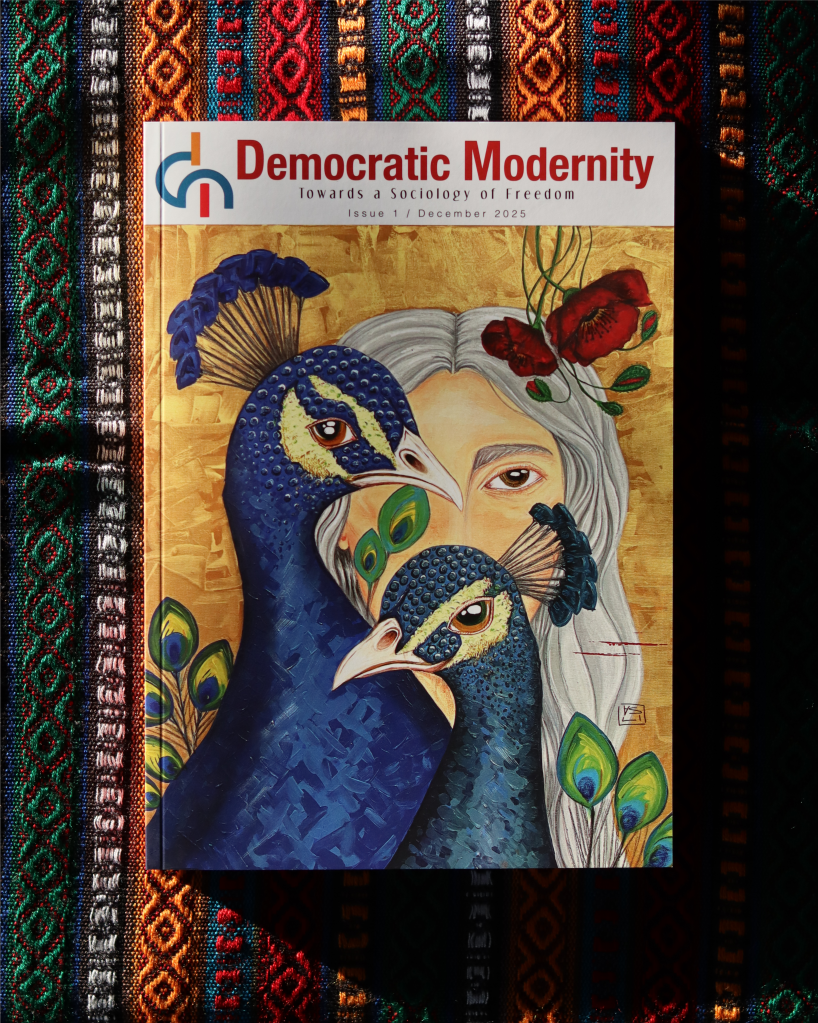
This journal aims to connect critiques of capitalism and modernity with the construction of democratic modernity, drawing inspiration from the democratic traditions of the Kurdish freedom movement and its foremost thinker, Abdullah Öcalan. For decades, they have been tackling their own situation, and its connection to other political conflicts, the current intellectual crisis, striving to avoid the pitfalls of modernism, nationalism and the glorification of state power. The Kurdish freedom movement has found original ways of looking at the past, historical societies, as well as connecting these insights to present societal questions and exploring pathways for the future.
Capitalist modernity puts an end to meaningful life, and science has played a significant role in this. However, capitalism did not create science; rather, it has undeniably exploited it. When science is harnessed for the interests of power and profit, it can result in profound moral abuses. It turns the already horrific femicides, Hiroshimas, genocides, the Holocaust, and ecocide into even more horrific and widespread realities.
Thus, in its current form life has lost all meaning and enchantment. Deception, especially self-deception and lies permeates everything. We must establish a complete opposition to power, including, but not limited to, its extraction of profit. However, without liberation from the dominance of positivism, we cannot emancipate ourselves from the influence of any power, especially that of the nation-state.
The theory of democratic modernity transcends a power-oriented and statist perspective, offering us a creative and imaginative departure from capitalist modernity. However, we can only theorize and cultivate its conceptual tools through a profound scientific, philosophical, and artistic critique of the prevailing system. As we deepen our understanding of the ideological hegemony that binds us and work to dissolve it, we can pave the way for the emergence of a mindset rooted in democratic modernity. This new consciousness can facilitate the reconstruction of democratic modernity. With the proposed intellectual revolution of democratic modernity and strengthening our perception of truth through philosophy, art, and science that is communally oriented, we can return to a life rich with meaning and enchantment.
Respect for life necessitates the end of this deception.
References
Federici, Silvia. 2004. Caliban and the Witch: Women, the Body and Primitive Accumulation. Autonomedia.
Hickel, Jason. 2021. Less is More: How Degrowth Will Save the World. Windmill Books.
Mies, Maria, Veronica Bennholdt-Thomsen, and Claudia von Werlhof. 1988. Women: The Last Colony. Zed Books.
Mies, Maria. 1999. Patriarchy and Accumulation on a World Scale: Women in the International Division of Labour. Zed Books.
Öcalan, Abdullah. 2009-2020. Manifesto of the Democratic Civilization, volumes 1–3, New Compass Press/International Initiative Edition and PM Press/International Initiative Edition.